
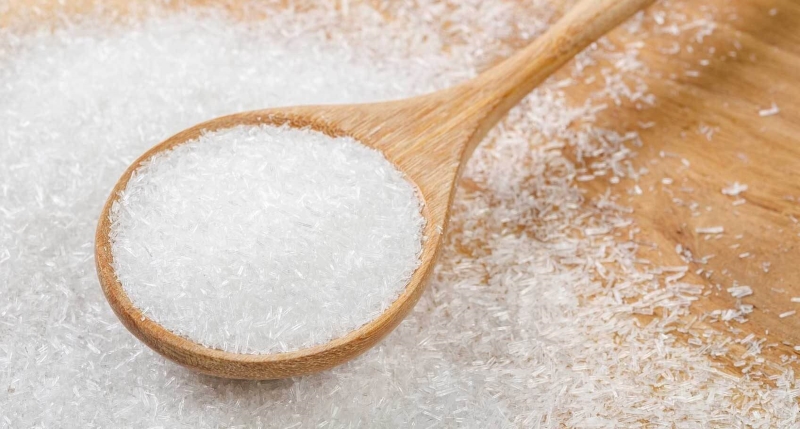
MSG (Monosodium Glutamate) has gotten a bad rap for decades, but the question remains: is it really as bad for you as everyone thinks? Here is the fascinating and bizarre history behind the origins of MSG-hate, and why you should actually be cooking with it a lot more.
Last Updated August 12, 2025
In this post we’ll delve into everything you ever wanted to know (or didn’t want to know) about MSG: What is it? What’s the history behind it? Why does everyone think it’s so terrible? And is it really? What are the health implications of using it? Should you be avoiding it like the plague? Or should you actually consider using it in your cooking more often?
Read on for the answers to these questions and more.
Introduction
When I was in high school, I was fortunate enough to get to spend some time in Japan. My host family’s mother was a very good cook, and she managed to turn out amazing and delicious meals from the tiny galley kitchen in the high-rise of her family’s Yokohama apartment.
Even back then, I had a fascination with food and cooking, so I used to sit outside the kitchen, perched on a stool in the dining room, peppering her with questions while she cooked (I didn’t sit in the kitchen with her, because the kitchen was only big enough for one person).
One of the things I observed was that she had a pinch bowl of something that wasn’t salt that she used to liberally season almost everything.
When I asked her what it was, she told me it was “flavor essence” – and that’s about as close to a translation as I could get. Aji-no-moto.
Turns out, it was MSG.
Fast forward 25 years. I was sitting in my doctor’s office, going over the results of some relatively routine bloodwork, and my doctor commented that my cholesterol was a little high.
“Not surprising,” I told him, “I’m a chef – we oversalt everything, because salt makes stuff taste good.”
“I know,” he replied, “but while it might be good for your food, it’s also probably not so good for you in the long run, so you really should lower your salt intake.”
“But Doc!” I protested, “How am I supposed to make things taste good without it? I’ve been eating this way for years.”
“Its called middle age buddy,” he said with a chuckle, “You can’t eat the way you used to – you’re not in your 20s anymore.”
He must have seen the crestfallen look on my face, because with a compassionate sigh, he continued.
“Look – how about just using some MSG? It’s not really the monster that everyone makes it out to be; in fact, it’s perfectly safe to consume, and it only contains 30% of the sodium of salt, and it’s the sodium that boosts your cholesterol.”
“The only problem you might have,” he went on, “is that it makes everything taste so good that you’ll have to watch your portion control.”
This wasn’t the first time I’d heard this, but I was a bit surprised to hear it straight from my doctor – but hey, doctor’s orders.
I immediately headed home to do some research. Here’s what I learned:
What is MSG?
If you’re chef-y, you probably already know that MSG stands for Monosodium Glutamate. You probably also know that it’s a flavor enhancer. But here’s something that you might not know: it’s actually not a chemical additive – it’s a naturally occurring substance present in many every day foods. Chances are, you’ve consumed a fair bit of it this week.
MSG is sodium plus glutamate, which is a non-essential amino acid. It’s in all kinds of things you probably eat on a regular basis: tomatoes, mushrooms, soy sauce, miso, kimchi, aged cheeses (like parmesan), anchovies, and cured meats – to name just a few.
MSG – in its purest, white crystalline form – was discovered in 1908 by Japanese chemist Kikunae Ikeda, who was a professor of chemistry at the Imperial University of Tokyo. As the story goes, one day he was having some soup for lunch, and he noticed that the broth tasted better than usual. When he inquired of the cook why it tasted so good, the cook explained to him that it was kelp added to the broth that was responsible for the enhanced taste.
Intrigued, Ikeda began attempting to isolate the variable in the seaweed that was responsible for the savory taste, and determined that it was glutamate. Additionally, he determined that when combined with sodium (from the salt in seawater), glutamate had the ability to enhance and intensify other flavors consumed alongside it. Ikeda patented the extraction process, and named the product “monosodium glutamate.”
That savory flavor imparted by kelp and many other foods became known as “umami” and eventually was identified as the fifth taste, along with salty, sweet, sour, and bitter.
In partnership with the Suzuki brothers, commercial production began and the product was named “Ajinomoto” which translates loosely to “essence of taste” – exactly what my Japanese host mother told me it was.
And the rest is history.
Or is it? The question remains: How did such a benign, natural product become vilified and demonized, and gain a stigma for being dangerous and unhealthy?
As it turns out, MSG was widely used in Asian, European, and American cooking in the first half of the 20th century. That all changed when a letter was published in The New England Journal of Medicine (NEJM), written by a Dr. Robert Ho Man Kwok, a Senior Researcher at the National Biological Resource Foundation in Springfield, MD.
In this letter, Dr. Kwok described his experience after having eaten at a Chinese restaurant, and described symptoms such as bloatedness, upset stomach, lethargy, and general malaise. He named the aggregate of symptoms “Chinese Restaurant Syndrome” (CRS) and labeled MSG as the culprit.
The story spread like wildfire, and the media jumped on the bandwagon, with major newspapers publishing stories like “Chinese food make you crazy? MSG is the No. 1 Suspect” (Chicago Tribune). Books were published, with titles like A Consumer’s Guide to Toxic Food Additives: How to avoid MSG and In Bad Taste: The MSG Symptom Complex: How MSG is the Major Cause of Treatable and Preventable Illnesses, Such As Headaches, Asthma, and Heart Disease.
The list is endless, and such publications continued for decades. Pretty soon, producers of everything from potato chips to orange juice were proudly putting labels on their products that said “No MSG Added.”
The thing is, as it turns out, it’s all a crock. Or should we say a “Kwok”?
See, Dr. Ho Man Kwok never actually existed. Neither did the “National Biological Resource Foundation” in Springfield, MD.
The whole thing, believe it or not, was a hoax that was the result of a bet. The real Dr. Ho Man Kwok was named Dr. Howard Steele, an orthopedic surgeon and trustee at Colgate University.
In 1968, Steele was an intern at Shriner’s Hospital. One of his colleagues used to tease him about his specialty, claiming that an orthopedic surgeon could never make it into a prestigious medical journal, say, for example, The New England Journal of Medicine (NEJM).
As a joke, Steele penned the letter and sent it off to NEJM, signing it “Robert Ho Man Kwok” – which he thought would be a funny joke to anyone who read it. Surely, everyone would see the obvious play on words.
They didn’t.
And if you missed it too, read “Ho Man Kwok” to yourself – it’s “Human Crock” as in “crock of sh*t” and it’s a mockery of the way some English speakers imitate a Chinese accent. It’s racist, and there’s a strong case to be made that MSG-hate is actually rooted in racism… more on that below.
For the full story, check out the PDF* referenced in the sources section of this article by the Journal of the Academy of Nutrition and Diabetics (which, unlike the bogus research institute in “Dr. Kwok’s” letter, actually does exist).
Once it became clear that no one got the joke – and moreover, that misinformation was beginning to spread like wildfire, Steele called the NEJM and came clean. They weren’t interested; in fact, a colleague of Steele’s who knew him hung up in his face.
To this day, the NEJM can’t (or won’t) say why they wouldn’t retract and set the record straight, but it would be a solid guess to assume that a prestigious journal like NEJM wouldn’t be to keen on admitting that they were taken as fools to help someone win a bet, and that their editors were too dense to see through what was obviously satire.
In summary though, MSG came to the US through China. As Japanese imperialism expanded into China and much of Asia, so did its food culture. In turn, as more and more Chinese emigrated to America, they brought their own food culture with them as well.
Even though Americans love Chinese food, they also love to stereotype it as dirty, unhealthy, greasy, etc. This Yelp review is a prime example:

Moreover, not only is it established that the whole MSG scare is a bunch of BS, there’s absolutely no evidence to suggest that MSG is bad for you in any way.
Additionally, there are very few products out there that don’t have MSG in them – because again, MSG occurs naturally in a lot of foods. As I mentioned earlier, chances are very good that you’ve consumed a fair bit of MSG in the last week.
That is, in fact, why most products don’t say “No MSG;” instead, they say, “No MSG Added,” meaning that MSG occurs naturally in ingredients in these products… the manufacturer just didn’t add any.
And in case you were wondering, the U.S. Food and Drug Administration (FDA) recognizes MSG as safe for human consumption. Which is a good thing, because again, it’s found in everything from mushrooms to tomatoes.
So, what about all the people over the years who have claimed that MSG made them sick? Are we to summarily dismiss their experience, or label them as gullible?
Probably not – but the culprit probably isn’t the MSG itself. It’s probably a variety of factors, but here are likely the two big ones: (1) the nocebo effect (opposite of the placebo effect), in which someone experiences harm because they expected to experience harm, and (2) the fact that my doctor was right – MSG definitely can tempt someone to overeat.
Compare the symptoms listed in the bogus letter to NEJM with your experience of overeating: bloatedness, upset stomach, lethargy, and general malaise. It should be obvious, right?
So, for the thousands of folks who claimed that they felt sick after eating food “laden with MSG”?
I have no doubt that they did. It’s just that the MSG wasn’t to blame – it’s partly that they expected to get sick, and partly that they just couldn’t control themselves because the food was so tasty.
If at this point you’re not convinced that MSG is safe to consume, then I’d encourage you to do your own research – there’s an enormous wealth of information on the subject. It took me a few days to compile the research for this article, and I’ve shared a few of these sources at the end of this post with links for the interested reader.
Without further ado though, here’s the next bit of information you might be looking for:
How To Use MSG In Your Cooking
In his post on Serious Eats, titled “Is MSG Actually Bad For You” (and, spoiler alert, he says it isn’t), Kenji Lopez-Alt notes that he, like his mother, and his mother’s mother (and, I might add, like my Japanese host family’s mother) keeps a small pinch bowl of MSG right next to the salt in his kitchen.
And I, after the conversation with my doctor and doing my own research, now do the same thing.
It took me a bit to figure out how to use MSG in the same way that I use salt. With salt, I’m used to regularly grabbing a three-finger pinch of Diamond Crystal Kosher Salt – which amounts to about ½ a teaspoon – and showering everything from veggies, to soups and stews, to steaks, to garlic bread from a height of about 30″ above the things I’m seasoning to ensure even distribution.
I’ll repeat this process several times at different stages of the cooking process, so I’m probably adding maybe slightly more than 1 tablespoon of kosher salt to most of the things I cook. Since usually I cook around 6 servings of whatever I’m making, we’re looking at maybe ½ teaspoon of Kosher salt per serving – which might not seem like a lot, but it does add up.
When I use MSG the same way, I’ll usually grab a two-finger pinch of it – which for me amounts to about a ¼ teaspoon, all told.
I use a combination of MSG and Kosher Salt most of the time now, and I’ve found that the effect of ¼ teaspoon (a two-finger pinch of MSG) is roughly equivalent to 1 teaspoon (2 three-finger pinches) of Kosher Salt when I use them in conjunction with each other.
So, where I’d normally do 3, three-finger pinches of Kosher Salt, I now do 1, three finger pinch of Kosher Salt plus 1, two-finger pinch of MSG.
In case it’s easier to make sense of this in equation form, it looks like this:
(Three-finger pinch, or ½ teaspoon, of Kosher Salt) + (two-finger pinch, or ¼ teaspoon MSG) = 3 x (three-finger pinches Kosher Salt)
This equates to a ratio of approximately 1:4 MSG to Kosher Salt.
The interesting thing about MSG is that it doesn’t really add any flavor to whatever you put it in – it just makes things taste more intensely like themselves. It makes asparagus taste like ASPARAGUS and steak taste like STEAK.
Salt does the same thing, more-or-less, but does add a bit of its own character into things, which is why a mixture of MSG and Salt are a nice combination, especially since – you guessed it – MSG makes salt taste saltier (in other words, just as with everything else, MSG makes salt taste like SALT), thus obviating the need for too much salt.
If you want to skip all that, just make yourself a pinch bowl of an MSG+Kosher-Salt Combo – shoot for a ratio of 1:4, or even 1:3, MSG to Kosher Salt. Give it a good shake, and carry on as normal.
One word of caution here: overusing MSG can have the same detrimental effect as over-salting, but since it appears in so many ingredients naturally, you have to be extra careful not to overdo it. Over MSG-ing things can result in a somewhat metallic or acrid tasting dish – and unlike salt, I haven’t found a way to undo its effects by re-balancing it with other things; in this way, it’s kind of like adding heat – once you overcook something, you can’t go backward – so, be sure to taste as you go!
The Results of Using MSG in Your Cooking
Here are some of the results I’ve observed once I made the switch to using MSG in my cooking.
First and foremost, the stuff just makes everything taste great. I don’t put food on the table in front of my guests or family, and say “This has MSG in it” – but I will tell them if they ask.
Sometimes they do, and sometimes they don’t, but one thing is consistent: everyone I feed takes a bite and says “OMG – this is so good.” If you don’t believe me, add a ¼ teaspoon of MSG to your garlic spread the next time you make garlic bread.
Now, to be fair to myself, people said this a lot about my cooking before I started using MSG, but it really does enhance flavors in a unique way.
Second, as previously stated, my doctor was right about the portion-control thing. Food tastes so good that you really do have to be watch your portion sizing, and watch out about going back for seconds and thirds.
If there are any deleterious health impacts to using MSG, it’s that it really does encourage you to keep eating… and eating… and eating (that’s why it’s so easy to polish off a whole bag of potato chips without thinking about it).
Again, as previously stated, if people do feel sick after eating things that have MSG in them, it probably isn’t because of the MSG – it’s more likely because they overate. Seriously, try sprinkling a little bit of MSG on vanilla ice cream and you’ll see what I mean.
Third – and I speak for myself here only (nothing I say should be construed as medical advice) – it did have a positive impact on my cholesterol. Although I’ve used MSG on-and-off for years, I’ve only been partially substituting it for salt seriously for about 6 months, but my recent bloodwork indicated that I’ve got my cholesterol down to reasonable levels.
Furthermore, the MSG experiment was the only factor I changed in the equation. I am a scientist after all – and besides, there’s no way in hell I’m giving up bacon and eggs.
This dramatic, measurable shift in my cholesterol might be because, as a chef, I used to use so much salt on a regular basis, but regardless, cutting back the salt and adding the MSG can definitely reduce overall sodium intake.
Conclusion
If you made it this far in this post, I hope you enjoyed reading it as much as I enjoyed writing it. The key takeaways here are these:
- The reason folks think MSG is bad for you is a fascinating study in human nature, confirmation bias, ego, racism, and bad science.
- MSG is recognized as safe by the FDA and isn’t dangerous or unhealthy, unless it makes you overeat.
- You should definitely consider using MSG in your cooking intentionally – you’re probably already consuming a lot of it in naturally occurring ingredients anyway, so why not harness its flavor enhancing power to increase your enjoyment of your food, and potentially reduce your sodium intake while you’re at it?
If you do decide to take the plunge and get some MSG, I’d recommend going for the OG version – Aji-no-moto, which you can get on Amazon. That’s the stuff my Japanese host-mother used.
If you’d prefer not to shop on Amazon, or you’d rather just buy it at the grocery store, you can get it in the baking aisle in the spices and seasoning section of your local grocery store. It will be called “Accent” and comes in a red and white container with a red top and the slogan “Wakes up food!” – which, as we’ve now discussed at length – it totally does.
And again, if you do decide to do this, leave some comments in the comment section below.
Happy Cooking!

Sources:
Business Insider: MSG Isn’t Dangerous, but Thinking so Is Rooted in Racism
Colgate.edu – The Strange Case of Dr. Ho Man Kwok
FDA: Questions and Answers on Monosodium glutamate (MSG)
The Guardian: Chinese restaurant syndrome: has MSG been unfairly demonised?
The Guardian: How MSG Got A Bad Rap: Flawed Science And Xenophobia
J. Kenji Lopez-Alt, Serious Eats – “Is MSG Actually Bad For You?”
*Journal of the Academy of Nutrition and Diabetics

Mayo Clinic: Monosodium Glutamate (MSG): Is It Harmful?
Feature Photo Courtesy Ajinomoto Group: https://www.ajinomoto.com/cms_wp_ajnmt_global/wp-content/uploads/jpg/msg_hero_pc-1696×910.jpg
Discover more from The Intrepid Gourmet
Subscribe to get the latest posts sent to your email.

 The Intrepid Gourmet
9 thoughts on “The Truth About MSG & Why You Should Cook With It More”