
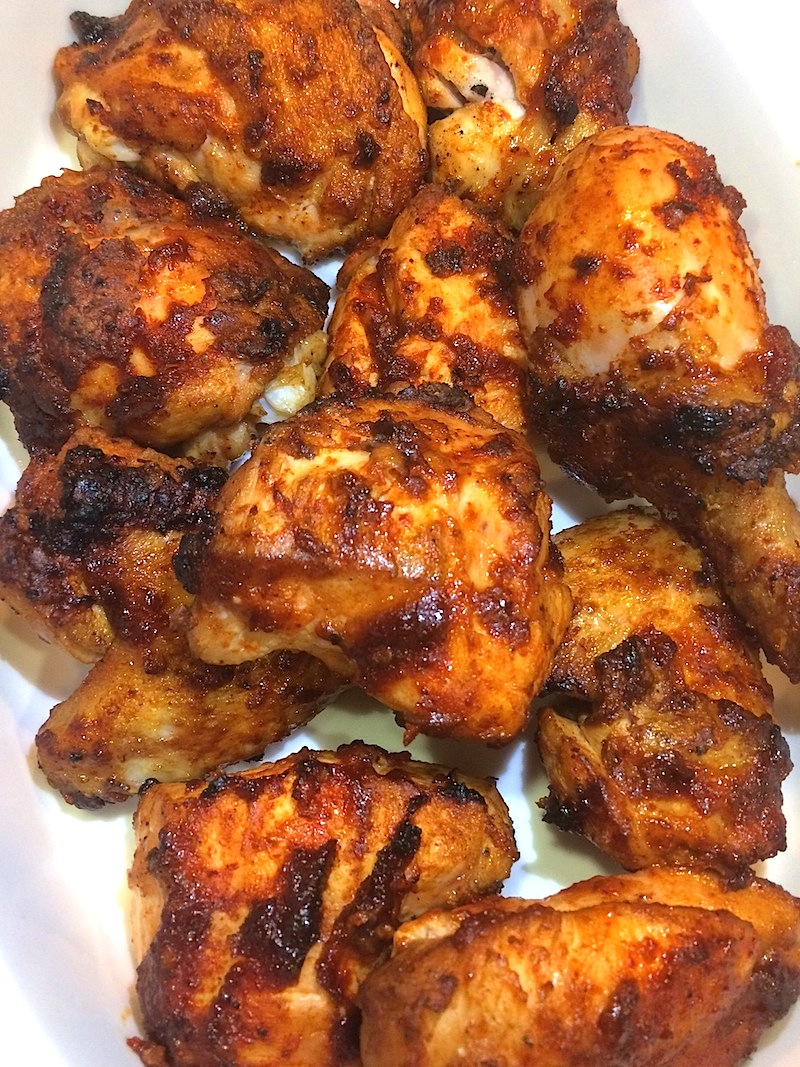
This BBQ Chicken is tangy, sweet, spicy and fresh. All the right flavors and a unique twist on classic BBQ chicken. Searing the chicken in a hot skillet ahead of time renders out a good bit of fat and leads to perfectly crispy skin. Finish either on the grill or in the oven and follow the instructions below to get perfect, bite-through skin and a beautiful end product.
Time: 60 minutes
Level: Easy
Cost: About $4/plate (depending on which pantry essentials you have on hand)
Serves: 3-6
Ingredients
For the Glaze
- 1 small onion or normal sized shallot, finely diced
- 3-5 cloves garlic, minced
- 1 TBSP unsalted butter
- 1 can Adobo Chiles in sauce
- 1 7oz can tomato sauce
- Juice of 4 limes
- 1 TBSP low sodium soy sauce
- 1/4 cup honey
For the Chicken
- 1 or 2 4-5lb fryer chickens, broken down into 8-10 parts, depending on how many you’re feeding (figure that a chicken will feed 3-4 people)
- 1/4 cup Kosher salt
- Drizzle of Olive Oil
- 3-6 TBSP flour
- 2-4 TBSP paprika
- Freshly ground black pepper
Instructions
PART ONE: Begin by brining your chicken:
Once you’ve got your chicken broken down into parts, place the chicken parts in a large bowl and cover with cold water. Add about 1/4 cup salt and mix around with your hands until the salt is mostly dissolved in the water. Refrigerate for at least 30 minutes, or up to 2 hours.
Cook’s Note: You can skip this step if you’re in a rush, but even 30 minutes in a light brine will lead to a considerably juicer and product.
PART TWO: While the chicken is brining, make your glaze:
- Melt butter in a sauté pan or large frying pan over medium heat until foamy but not browned (use non-stick here if you like).
- Add onion and garlic and sauté until fragrant and onions are mostly translucent, 3-5 minutes
- Add can of chiles, along with their sauce, and sauté with onions and garlic, another 3 minutes, or until chiles barely being to caramelize
- Add tomato sauce, lime juice and soy sauce and stir to incorporate well
- Stir in honey and reduce, stirring continually, until mixture has thickened and a light glaze begins to appear.
- Off the heat and allow to cool
PART THREE: While your glaze is cooling off, prepare the chicken:
- Preheat oven to 350°F or begin preheating grill (see Part 5, below).
- Remove chicken from the brine and pat dry with paper towels. Place chicken in large mixing or tossing bowl and drizzle with olive oil. Toss to coat.
- Add flour, paprika and pepper to the bowl with the chicken (if you didn’t brine ahead of time, add a generous pinch of kosher salt here as well). Toss again to coat and let stand at room temperature for 10 minutes.
PART FOUR: While your chicken is standing, finish your glaze
- Add your glaze to a blender or food processor and pureé until mixture has the consistency of marinara sauce
- Divide your mixture into two separate bowls (for two batches) and reserve
PART FIVE: Cook the chicken
- Begin by heating 3 tablespoons ghee, clarified butter, grapeseed oil, vegetable oil or Canola oil in a cast iron or stainless steel skillet until shimmering and very hot (any oil or fat with a high smoke point will work fine here)
- Add half the chicken pieces to the hot skillet, skin side down, and brown, 5-6 minutes. Flip and continue to brown the other side, another 3-4 minutes. (Note: If your chicken is still stuck to the pan when you try to flip it, it isn’t ready. Wait until a light prodding with a set of tongs sets it free and flip). Remove, reserve, and repeat with remaining chicken pieces.
If Finishing On The Grill
- Light a gas grill on one side only, or alternatively bank charcoal on a charcoal grill to one side, creating a hot side and cool side of the grill. Add a few wood chips for extra smokey flavor.
- Place seared chicken on the cool side of the grill, skin side down. Place the breasts farthest away from the heat and the dark meat closer to the heat. Baste chicken with first batch of glaze. Flip, so that the chicken is skin side up, and baste again. Discard any glaze that remains from this batch.
- Cover the grill and cook until breasts reach an internal temperature of 150° – 160°F and thighs and legs are 160° – 170°F.
- After about 15 minutes, use the second batch of glaze to baste your chicken a second time. Use this opportunity with the grill open to take your chicken’s temperature with an instant read thermometer. Be sure to leave chicken skin side up.
- When chicken is up temp, move chicken over to hot side of grill and cook, starting skin side down, until nicely charred. Repeat on the other side.
- Remove, and allow to rest, skin side up, for 10 minutes before serving. DO NOT COVER WHILE RESTING – your perfectly crispy skin will get all soggy!
If Finishing in the Oven
- Set chicken on a wire rack over a baking sheet, skin side down. Baste chicken with first batch of glaze. Flip, so that the chicken is skin side up, and baste again. Discard any glaze that remains from this batch.
- Bake in 350°F oven until breasts reach an internal temperature of 150° – 160°F and thighs and legs are 160° – 170°F.
- After about 15 minutes, use the second batch of glaze to baste your chicken a second time. Use this opportunity with the oven open to take your chicken’s temperature with an instant read thermometer. Be sure to leave chicken skin side up.
- When chicken is up temp, switch oven to BROIL – HIGH and cook for 2-3 minutes, until nicely darkened. Watch carefully that it does not burn.
- Remove, and allow to rest, skin side up, for 10 minutes before serving. DO NOT COVER WHILE RESTING – your perfectly crispy skin will get all soggy!

 The Intrepid Gourmet