Grilled Fish Tacos

These Fish Tacos are as simple as they are delicious.  The thing that really, really makes them is the toppings – Fresh Homemade Guacamole, Homemade Pico De Gallo, Chipotle Mayo –  and Cotija cheese.  The perfect treat for a summer evening.

Ingredients

  1. 2-3 lbs Mahi Mahi (figure 8-12 oz per person)
  2. Medium sized corn tortillas
  3. 3 tomatoes, diced
  4. 1/2 medium red onion, finely diced
  5. 4-5 jalapeño peppers, finely diced
  6. 1/2 cup fresh cilantro, finely chopped
  7. 4 ripe avocados
  8. Hatch green chiles (optional)
  9. 8-10 limes
  10. 1/2 cup mayo (homemade is best)
  11. 2 Tablespoons sour cream
  12. 2 chipotle chiles from a can of chipotles in adobo, seeded and finely minced
  13. 1 teaspoon adobo sauce from the same can in (12)
  14. Juice and zest of one lime.
  15. Cotija cheese

Instructions

For the Pico de Gallo

  1. Begin by dicing up the tomatoes.  Transfer diced tomatoes to a colander, season very generously with Kosher salt, toss, and transfer to the sink to drain.  Doing this first while prepping the other ingredients will allow time for the salt to pull the moisture out of the tomatoes, which will ensure that you don’t have a watery salsa at the end.
  2. Dice jalapeños (reserving half for the guacamole)
  3. Dice onion
  4. Chop cilantro (use 1/3 for the Pico, 1/3 for the guacamole, and 1/3)
  5. Retrieve tomatoes from colander.  Combine all ingredients in a medium bowl.  Squeeze the juice of 1 lime over mixture.  Toss, cover and refrigerate until ready to use.

For the Guacamole

  1. Peel and pit avocados.  Place in a medium bowl.
  2. Squeeze the juice of 1 lime over avocado flesh and season with Kosher salt
  3. Add the remaining jalapeños and 1/3 of the cilantro and mash together until smooth, using two forks or a potato masher

For the Chipotle Mayo

  1. Combine Mayo, sour cream, chipotle chiles, adobo sauce, lime juice and lime zest together in a blender or food processor
  2. Process until smooth.
  3. Transfer to a squeeze bottle for easy use.  Will keep in the fridge for up to 2 weeks.

For the Mahi Mahi

  1. Brush mahi-mahi steaks lightly with olive oil.  Season with salt and pepper (or whatever other seasoning you feel like).  Grill fish over medium-high heat until center registers 145°F on an instant read thermometer.
  2. Cut mahi-mahi steaks in half lengthwise

For the Tortillas

  1. Sprinkle tortillas with cotija cheese.
  2. Warm tortillas on a hot griddle or frying pan until cheese is melted.

Final Assembly

Place 1-2 fish strips on each tortilla.  Top with Pico de Gallo, guacamole, chipotle mayo, extra cotija cheese, and a squeeze of fresh lime.

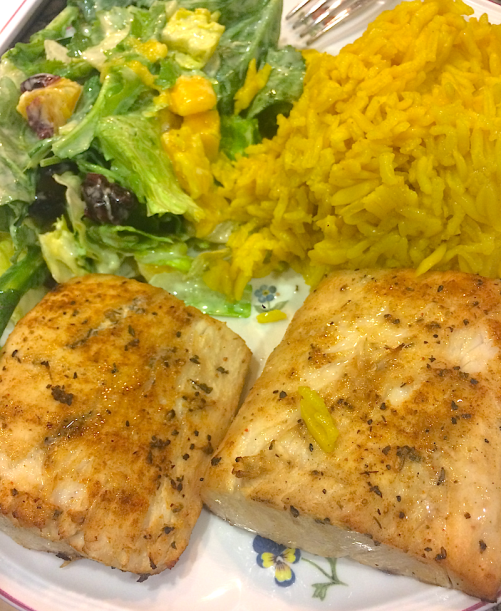
Grilled Mahi Mahi with Rice Pilaf and Summer Greens

Other than salmon, Mahi Mahi is my favorite fish to cook with.  It is firm, but not too firm, flaky, but not too flaky.  Meaty like swordfish but tender like cod.  Really, it’s the perfect fish.  Perhaps most important, it is currently not over-fished and is therefore a sustainable option.  It works well pan fried, crusted – however you want it; it work’s so well it really deserves a blog post all of its own.  But this post is on grilling – in and out in 30 minutes or less, the perfect dinner for a summer evening.  The main point of this post?  This is a hard one to screw up, so exercise those creative genes and do what makes you happy.

Ingredients

For the Pilaf

  1. 2 cups white rice
  2. 1/2 cup orzo (it’s pasta, technically, but it looks like rice – you’ll find it with pasta in the grocery store)
  3. 1-2 tablespoons butter or oil
  4. 1 small shallot, minced
  5. 2 cloves garlic, minced
  6. 1 tsp turmeric (or whatever other combination of herbs and spices make you happy).
  7. 2 teaspoons Kosher salt
  8. 5 cups liquid (water, chicken stock, whatever)

For the Summer Greens

I like a mixture of whatever mixed greens look good at the store – baby spinach, arugala, kale… whatever works.  To these I would add something on the order of 1/4 cup of dried cranberries, 1/4 cup chopped walnuts, perhaps some sliced oranges and this chili-lime and mango dressing – whatever makes you happy.

For the Mahi Mahi

  1. Mahi Mahi steaks (figure on 1-2 per person, depending on their appetites)
  2. 1 tablespoon olive oil
  3. You favorite fish seasoning (the poultry rub found in this post works surprisingly well on a lot of things, including fish.  Or you could use your favorite cajun seasoning for a blackened version.  Point is – do whatever makes you happy.  You’re getting this gist of this post now =D).

Method

For the Pilaf

  1. Heat oil and butter in whatever saucepan you’re going to use to make the rice.  Once butter is melted but still foamy, add shallots.
  2. Add garlic and sauté, 30 seconds
  3. Add orzo and, stirring constantly, toast until aroma is lightly nutty, 30 seconds to 1 minute
  4. Add liquid
  5. Add salt
  6. Add Turmeric, or whatever other herbs you’re using
  7. Add rice, cover and bring to a boil.
  8. Reduce to a simmer and simmer, covered, until all the liquid is absorbed, approximately 25 minutes

For the Summer Greens

Mix all dry ingredients together.  Dress salad right before serving.

For the Mahi Mahi

  1. Preheat grill to high heat.  Make sure the grill grates are clean.  Fish is notorious for sticking to the grill.
  2. Lightly brush mahi mahi steaks on both sides with olive oil
  3. Season steaks with seasoning of choice on both sides
  4. Lay steaks on hot grill, presentation side down, and grill for 3-5 minutes.  Using a metal spatula (use a fish spatula if you have one), turn the steaks over and grill for another 2-3 minutes, or until internal temperature reads 140°F.  Do not overcook.
  5. Remove from grill and place on platter; tent loosely with foil and allow to rest, not more than 5 minutes.

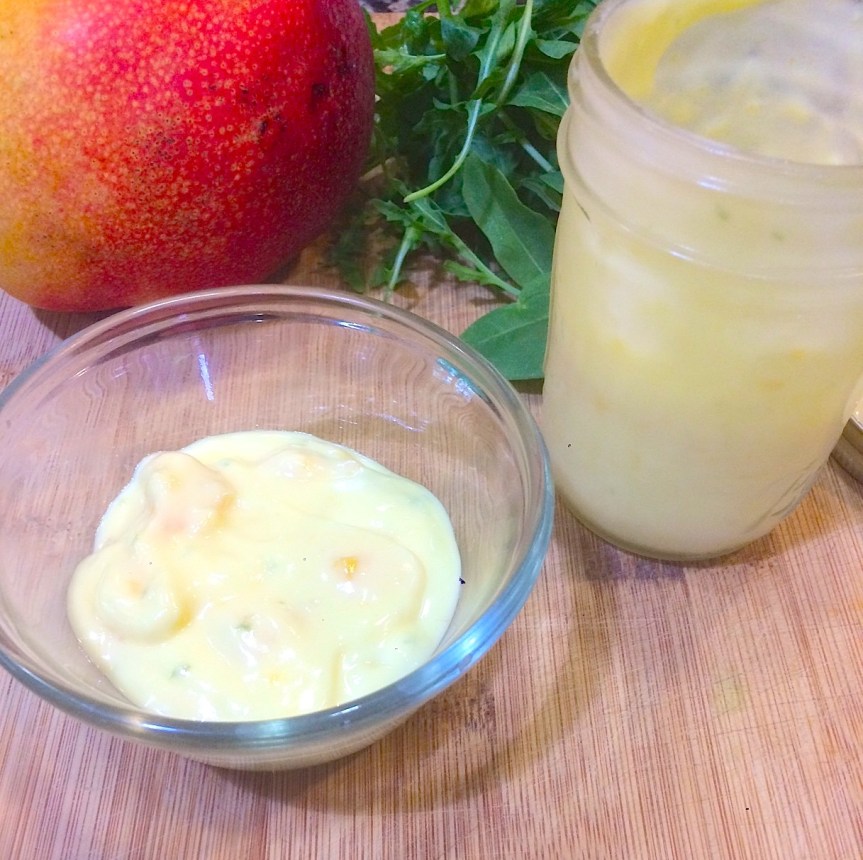
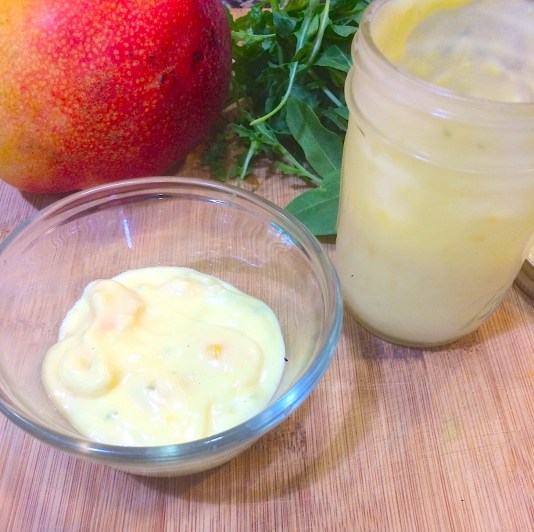
Chili-Lime Mango Dressing

Sweet, Spicy, Tangy, Creamy – this dressing is a sure fire way to liven up any medley of mixed greens.  Add sliced oranges, dried cranberries, an avocado, some walnuts – whatever suits your fancy – and you’ve got yourself a unique and amazing salad.

Ingredients

  1.  5oz full fat plain Greek yogurt (2% will work fine also, just not “low fat”)
  2.  1 Egg
  3.  2 limes – zested and juiced
  4.  1 medium orange, zested (save the flesh for your salad)
  5.  1 tablespoon rice wine vinegar
  6.  1/2 teaspoon chipotle chili powder (or to taste)
  7.  Pinch of Kosher Salt
  8. 1 Mango, peeled and finely chopped and divided into two piles
  9.  Approximately 1 cup vegetable oil.

Instructions

  1. Combine ingredients 1-7, plus one of the mango piles, into a food processor or cup that fits an immersion blender. Pulse everything a few times to combine.
  2. With the motor running, slowly drizzle in the vegetable oil, starting with a few drops at a time, until a thick emulsion begins to form.  Alternatively, use the immersion blender dressing trick:
    http://www.youtube.com/watch?v=c7kYiEB4ogYThis trick is really worth learning because in addition to making mayo, you can make aolis, dressings, spreads – whatever your imagination conjures up.
  3. Add the other mango pile to your dressing and refrigerate for 30 minutes to allow to thicken up.  Dressing will keep in the fridge for up to 1 week.

Southern Chicken Salad

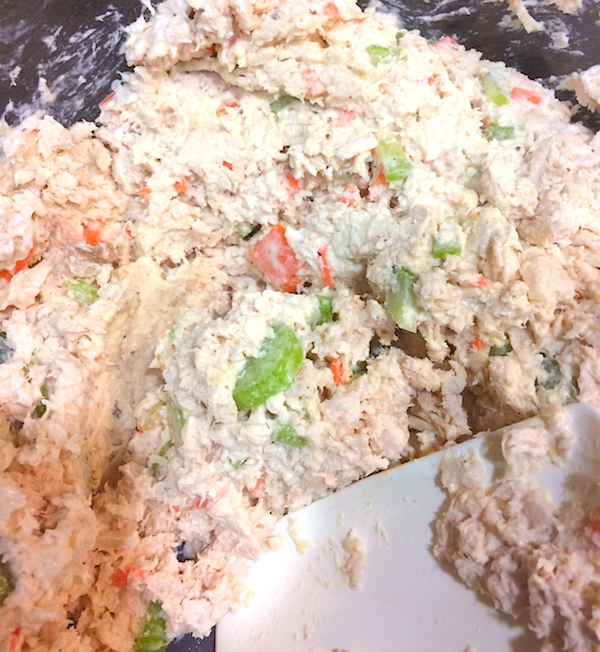
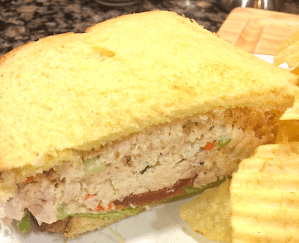
Chicken Salad is one of those things that people apparently have really strong opinions about.  That should come as no surprise, considering the number of different versions there are out there; there’s chunky chicken salad, smooth chicken salad, Napa Almond chicken salad.  Some people like to add grapes, some people like to add Indian or Eastern spices; Trader Joe’s actually stocks three entirely different versions on its shelves.  All that being said, I prefer the version here – what I call “Southern Chicken Salad” – a bit tangy, nice and smooth but still with a bit of texture, not too much mayo.  The secret here is using a food processor to chop the chicken rather than doing it by hand.

Level:  Easy
Cost: Cheap (especially if you’re using leftovers)
Serves: A Lot
Times: 15-20 minutes

Ingredients:

  1. Chicken.  Use leftover chicken, one of those store bought roasted whole chickens, or whatever kind of chicken you like.  Sous Vide chicken breasts are exceptionally nice.
  2. 2 or so stalks celery, finely chopped
  3. 1 carrot, peeled, then peeled some more, with edible shavings finely chopped
  4. Juice of 1 lemon
  5. 2 TBSP minced shallot or sweet onion (optional)
  6. Creole seasoning (Old Bay works well), to taste (optional) – adds a little zing.
  7. Mayonnaise – to taste.

Method:

  1. Add chicken to food processor, work in batches if necessary.  Hit ‘pulse’ a bunch of times to chop the chicken, scraping down the sides between pulses as necessary.  You don’t want to turn it ‘on’ nor do you want to make chicken paste here.  You just want it finely chopped.
  2. Transfer chopped chicken to a large mixing bowl.  Add ingredients 2-6 and stir well to combine.
  3. Begin adding mayo, 1-2 tablespoons at a time, until desired consistency is achieved.

Serve with crackers, over a bed of lettuce, or in a sandwich.  Enjoy!

Steaks Sous Vides – The Perfect Steak

It doesn’t get much better than this people.

If you’ve spent much time reading this blog, you know that I’m all about temperature, because temperature is the only reliable way to gauge how your food is going to turn out.

Of course temperature and heat are different things.  Heat is about how much energy you’re putting into your food whereas temperature is a way to read how much heat is in food already.

Think about it like this:  If you decide to slow-roast a piece of meat on your smoker or in your oven at a low temperature over a period of hours, you’re putting a little bit of heat into it over a long period of time.  Conversely, if you sear a steak over a hot grill or in a hot cast iron pan, you’re putting a lot of heat into it very rapidly.

The reason it’s hard to cook that perfect steak, which is medium rare bumper to bumper with a crusty, golden edge is because there’s almost no way to cook it on low enough heat for it to turn out truly perfect.  Even slowly bringing your steak up to temperature in a 200°F oven before searing it (the method I generally recommend) is going to leave striations of doneness to a small degree.  Put too much heat in and it’ll be a bullseye of doneness with only the very center cooked correctly.

Enter the Sous Vide cooker – the solution to all of your protein problems.  No more striations of doneness, no more raw centers, no more accidentally-well-done food.  Just perfect, all the time.

How does this work?  Basically, when you cook something sous vide you hold the entire piece of protein at exactly the temperature you want for an extended period of time so no matter how much time it takes, you never overcook it.

So, what exactly is sous vide?  Sous vide is the process of cooking something in a water bath which is set to an exact temperature.  Essentially, what you do is you vacuum seal you protein in a plastic bag, either using a vacuum sealer or the water displacement method (I use the latter method; it’s cheaper and has never caused me any problems) to get all the air out of the bag and drop it in a pot of water that’s being held at a constant temperature until it’s cooked through; then you simply finish it off over high heat to sear the outside and there you have it – perfectly cooked food.

This is, in fact, the way high end steakhouses typically cook their steak.  Ever wonder how a table of five can order three different cuts of steak, one rare, two medium-rare, one medium, and one medium-well and they all arrive at the table at the same time, perfectly cooked, exactly as ordered, edge to edge?  The answer is sous vide.  They’ve had those steaks sitting in different water baths at different temperatures for hours, waiting to be finished off on a hot grill and brought to your table.

That’s the secret.

You can achieve these results at home too.  There are three ways to do this:

  1. Stove top method.  Heat water in a large pot to exactly the temperature you want, verify using a thermometer, and constantly fiddle with the temperature for hours until you’ve got whatever it is you’re making cooked through.  Forget it.  Too much time, too hard.
  2. Beer Cooler method.  This works astonishingly well.  Essentially, you get your water bath to a few degrees higher than your cooking temperature and the insulated walls of the cooler should hold your water at a relatively constant temperature for a few hours; long enough to cook a steak.  J. Kenji Lopez-Alt describes the process here.
  3. Purchase a sous vide immersion circulator.  It used to be that these things were too pricey for the average home cook, but due to the popularity of the sous vide method of cooking they are becoming increasingly affordable.  Generally, they’ll run you anywhere from $75-$150.  I got mine at Aldi for $49.99.  So far so good.

No matter what method you use, you really owe it to yourself to try cooking something sous vide the next time you have a couple hours.  Here’s a short recipe for the steak featured above.

Ingredients

For the Garlic-Herb Butter:

  1. 1 stick salted (yeah, i know) butter, room temperature
  2. 3 tablespoons fresh parsley, minced
  3. 2 tablespoons fresh basil, minced
  4. 3 sprigs fresh thyme, minced
  5. 2 cloves garlic, smashed into a paste (or squished in a garlic press)

For the Steak:

  1. 2 steaks (filet, strip, or ribeye), 1.5 – 2 inches thick (the thicker the better, ask your butcher to cut you a few steaks if the ones in the case are less than 1.5 inches thick – remember, you’re searing these off at the end and it is possible to overcook your steak during that process).
  2. 2 cloves garlic, smashed
  3. Fresh herbs (such as rosemary, thyme, etc), optional
  4. Kosher salt and freshly ground black pepper

Instructions:

For the Garlic-Herb Butter:

  1. Mix all ingredients together in a small bowl until very well combined.
  2. Using plastic wrap, roll the butter into a log shape and twist the ends off (like a tootsie roll)
  3. Refrigerate until needed.

For the Steak:

  1.  Heat a water bath to 130°F for medium rare (135° for medium, anything past that forget the whole sous vide thing and just incinerate it on your stovetop; it’s easier that way).
  2. Season steaks generously with salt and pepper.  Toss each steak individually in a food-grade gallon size freezer bag along with the smashed garlic clove and herbs, if using.
  3. Using the water displacement method, seal the steaks in their bags.
  4. Introduce steaks to water bath and make sure they’re fully submerged, weighing them down if necessary.
  5. Hold steaks in the water bath at a constant temperature for at least 2 hours and not more than 4 hours.
  6. Remove steaks from bags and pat very dry with paper towels (Note:  they will look really weird – grayish brown and mushy – after coming out of the water bath; don’t worry, all is well).
  7. Sear the steaks over high heat, either in a cast-iron pan or ripping hot grill (surface temperature of heating surface should be 400°F – 500°F), 15-30 seconds per side.
  8. Remove steaks from heating surface and allow to rest; while resting, top steaks with sliced rounds of garlic herb butter and tent lightly with foil until butter is melted, 3-5 minutes
  9. Slice and serve